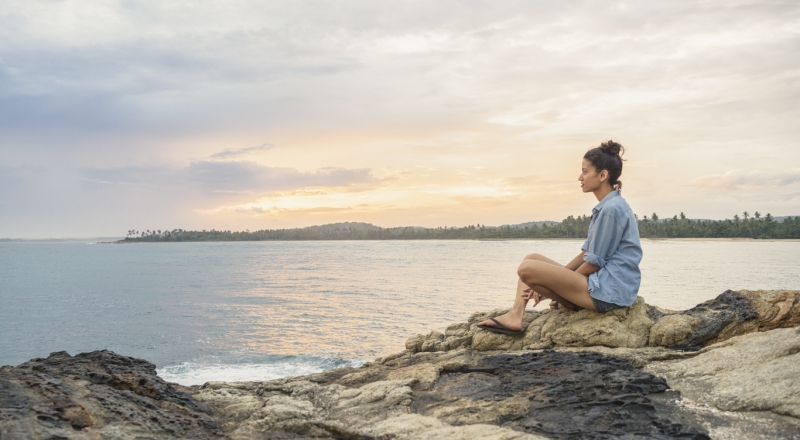
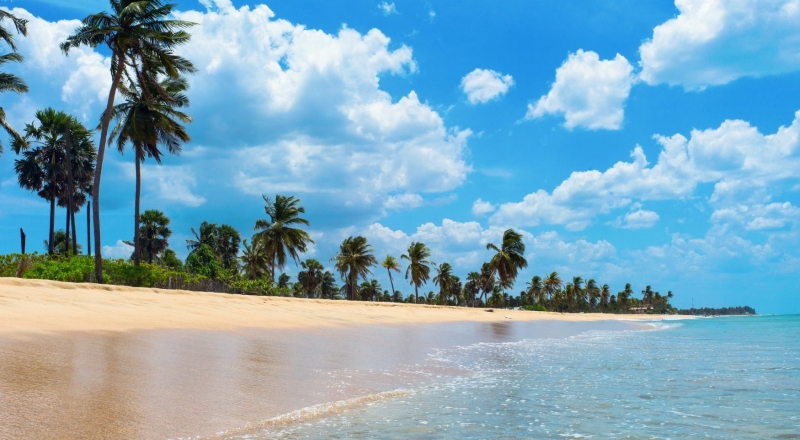
One of the world's natural harbors Trincomalee. Old even beyond the time, chronologically recognized as the noteworthy Gokanna port pinpoint of ancient world trade. The Shiva devala is the Trikuta hill in Hindu Vayu Purana. The vast majority simply go through the city on their way to the adjacent shorelines of Uppuveli and Nilaveli, however, the town has some appeal, a lot of proven history.
Trincomalee is on the East coast of Sri Lanka with wildlife, beaches, hilltops formed the venue a distinguished. What mainly makes Trincomalee great is the natural port. It is the 265km distance from Colombo to reach.
Attractions
Trincomalee Harbor
From the earliest times, the Trincomalee harbor in Koddiyar Bay was the primary reason why the outer world sought to acquire Sri Lanka. It is the only harbor in the Indian ocean which can sail safely under any weather condition and the second-best natural harbor in the world.
The Trincomalee port, the external port, and the inland port are spread over 5261 hectares. Every day, the Trincomalee port is open 24 hours a day, excluding May Day. Those who visit the harbor must obtain a permit of Rs. 25 for school children, 50 rupees for domestic tourists under 18 years and 100 for local adults. A service is being executed for boat tours. The permit will be given to tourists not only for boat excursions but also for the Naval Museum entrance.
Maritime and Naval History Museum
It was built by the Dutch around the 17th century at the Naval harbor premises of the Trincomalee Harbor. In 2013, it was opened by President Mahinda Rajapaksa in concurrence of the 65tth independence day celebrations. The Maritime and Naval Museum is displaying maritime history, marine biology and naval force history of Sri Lanka.
The chamber used by the Dutch naval commissioner has used for museum premises after reconstruction with aids of the Netherlands, and the same can be seen from the ticket for the Trincomalee harbor. The museum is open from 8.30 am to 5.30 pm daily.
Fedrick Fort or Trincomalee Fortress
Built-in 1623 by the Portuguese, at the destroyed Koneshvaram Devalaya, was captured by the Dutch Admiral Westervold in 1639 AD and rebuilt in 1665 by the Dutch and re-named Frederick Fort.
Later, it was taken over by the French, and it was ruled by the British in 1795. During World War II, the Fedrick fort, which provided accommodation to the Marine Corps, is now controlled by the Sri Lankan Gajaba Regiment of Sri Lanka Army. The rebuilt Konesvaram kovil is within it.
Konesvaram Kovil
The Koresvaram Devala or Thirukoneswaram is situated inside fort Fedrick on top of Swami rock. It is built for the Coneser, one of the natures of god Siva, and is called the "devala of thousand pillars”. It is considered to be the oldest Siva devalas in Sri Lanka, originally built only in the 3rd century.
In the 17th century, the Portuguese destroyed the first Konesvaram kovil and used its debris in building the fort Fedrick. The Devalas, statues and valuable tools were taken to the Lisbon museum. Some of the temple statues were hidden by the devotees underground and excavated by archaeologists during 1944-1950. With the help of such statues discovered in 1963, the kovil was rebuilt.
Ravana’s Cut
One of the most beautiful and adventurous views of the Indian Ocean is the Ravana’s Cut or Lover's Leap, a few meters away from the Kovesvaram Devalaya. It is a rocky hill 350m high with a straight slope. It has created some tragedies.
The most popular tragedy being the story of Francina Van Reid. She was the daughter of a senior class civil servant in Holland and was engaged to a young Dutch official. He suddenly broke the marriage contract and sailed to Holland from the port of Trincomalee. The heart-broken Francina had committed suicide by leaped over the Ravana’s cut. Later several lovers have done the same giving name Lover’s leap. Presently, there is a 3-foot fence around the rock for the protection of visitors.
Marble Beach
Located on the Trincomalee-Kinniya Road, about 18 km off the Trincomalee town, the marbled beach is one of Sri Lanka's most beautiful beaches. Facing to the Koddiyar bay, which is sunny and shining like a marble surface, and it has the name Marbella Coast.
This is the best time to travel to this beautiful beach on April-September between to sea-swimming, bird watching, fishing boats, and diving.
British War Burial
It is to remember the soldiers who fought for the British in second ward war, located in the route to Nilaweli Beach about 6 km North of Trincomalee town. It has 364 soldiers’ burials and was opened in April 1948. It is owned by the Commonwealth War Graves Commission, but its maintenance is carried out by the Sri Lanka Defense Ministry.
Kanniya Hot Water Springs
Kanniya has 7 hot springs, which are shaped like squares. The bottom of the well is 3 – 4 ft deep. Generally, when the water is taken out of 10-15 buckets of water, it is natural drying up the wells. These water springs are said to have existed even during the reign of King Ravana, even Ramayanaya they have mentioned. Kinniya hot springs are popular with the belief that heals for allergies, rheumatic pain and other skin diseases will heal.
Nivaweli
Nilaweli is a stretch of shoreline which is arranged around 16 kilometers North of Trincomalee, passing the flourishing tidal pond on either side and lavish coconut palm and best in scenic from May to September. Touching base at the village of "Errakkandy," a sharp right turn will bring down a rock street to Nilaweli shoreline, just about a kilometer of in length, white sandy shoreline with delicate surf. Over the shoreline, around two kilometers into the sea will see the well-known pigeon island. Further up North a bunch of rosy rocks which are alluded to as the red shake shoreline. Uppuweli, the small village begin beach spread to shrubs of Kuchchaveli
Pigeon Island
The only national park in Sri Lanka with two islands situated about one kilometer away from the Nilaveli coastline with 471,429 hectares Located in the East dry zone of Sri Lanka. The average temperature is 27 Celsius. Mostly dry season survival and in the time of rain, there is heavy rainfall. The annual rainfall is between 1000-1500mm and rainfall is from the North East monsoon from October to March.
The main reason for naming as Pigeon Island is named because of the shake pigeons perching on it by the hundreds. A treasure trove of the park has emerged, a coral limestone. In 1963 the island declared as a sanctuary, and in 2003 it was renamed as a national park. This island is to the 17th in the national parks of Sri Lanka.
Island has two parts as large and small. The large one is near the reef. The coral reef, which is located here, attracts tourists. It can be seen individually and cluster corals in various forms. A particular group of vertebrates and invertebrates can be seen to protect corals. About one hundred species of coral are found here. There are many fish varieties throughout the Trincomalee coast. It can also be fortunate enough to observe shark near the shallow reef reefs.